Designing high-impact custom logo uniform shirts requires matching your company’s visual branding with the proper textile decoration method. While fabric composition and garment fit dictate daily employee comfort, your logo decoration represents your brand identity to clients and the public. Selecting an incompatible branding application can lead to cracked prints, puckered chest pockets, or faded colors after just a few wash cycles.
📌 Table of Contents
- Why Custom Logo Uniform Shirts Require the Right Branding Method
- Which Branding Method Is Best for Custom Logo Uniform Shirts? (Direct Answer)
- 1. Direct Embroidery — Premium Texture & Maximum Durability
- 2. Screen Printing — Ideal for High-Volume, Flat-Color Logos
- 3. Heat Transfer & DTF — High Detail & Small Run Flexibility
- Master Decoration Comparison Matrix
- Placement & Sizing Conventions for Uniform Branding
- How to Prepare Your Logo Artwork File for the Factory
- Best Practices for Sourcing Custom Logo Uniform Shirts
- Frequently Asked Questions
Why Custom Logo Uniform Shirts Require the Right Branding Method
Ordering custom logo uniform shirts for a corporate workforce involves balancing aesthetics, wash durability, and unit decoration costs. A premium 65/35 poly-cotton woven shirt will appear cheap if decorated with a thick vinyl heat transfer that cracks after five commercial washes. Conversely, applying heavy, high-density embroidery on a lightweight 120 GSM poplin shirt causes severe fabric puckering and skin irritation.
Enterprise procurement teams must evaluate fabric weight, daily workplace exposure (indoor office vs outdoor industrial field service), commercial laundry heat levels, and logo design complexity before choosing a decoration process. Selecting the correct uniform branding methods guarantees long-term color retention and professional brand presentation.
Which branding method is best for custom logo uniform shirts?
Which branding method is best for custom logo uniform shirts?
Direct Answer: Direct Embroidery is the overall best decoration method for corporate uniform shirts due to its three-dimensional texture, executive aesthetic, and supreme wash durability (100+ wash cycles). Screen Printing is most cost-effective for large back logos on high-volume runs (500+ units), while DTF/Heat Transfer is best for complex multi-color photographic gradients on smaller orders.
1. Direct Embroidery — Premium Texture & Maximum Durability
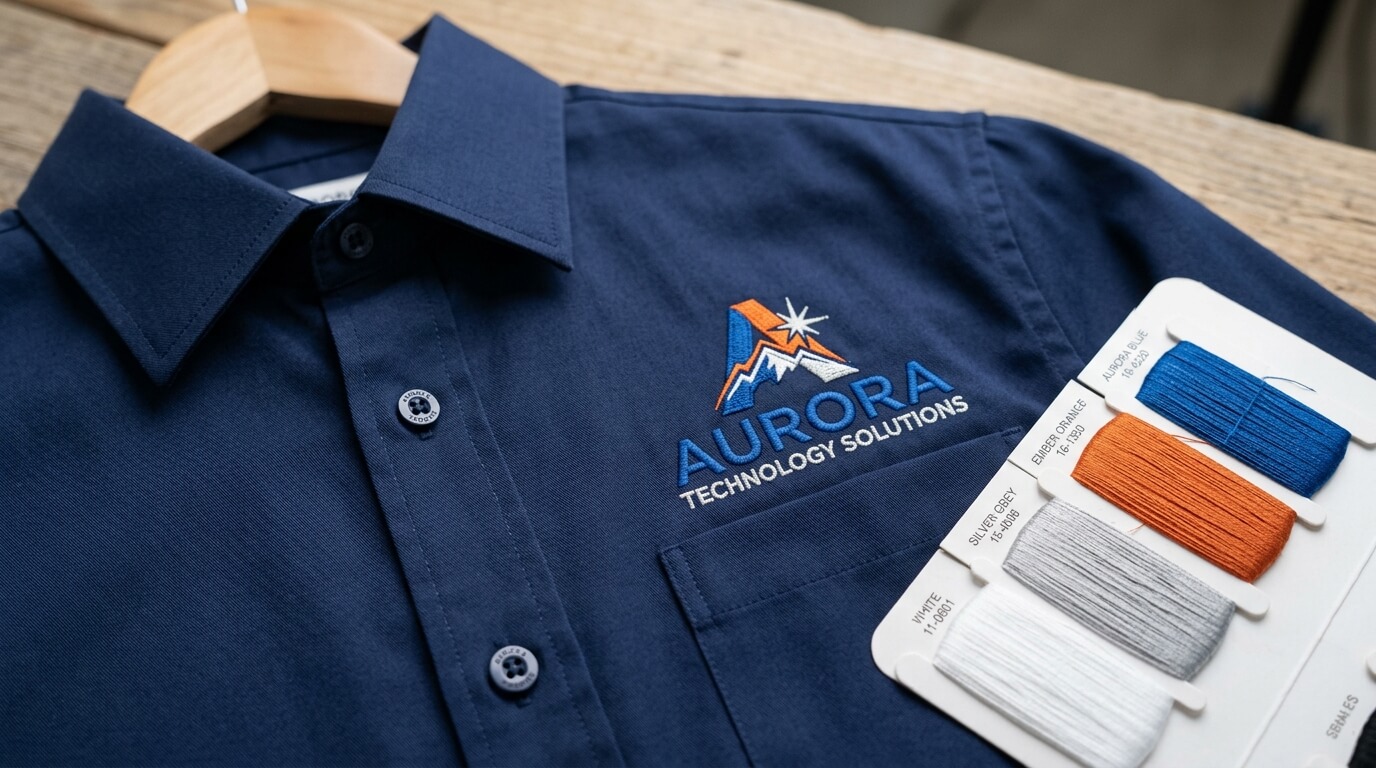
High-speed computerized embroidery machines stitch colorfast polyester or rayon threads directly into the garment fabric. In the debate over embroidery vs screen print for corporate dress shirts, embroidery remains the gold standard for executive and front-line professional apparel.
- Visual Aesthetic: Delivers a elevated, three-dimensional tactile finish with vibrant luster that conveys corporate prestige.
- Wash Durability: Exceptional resistance to commercial laundering, high water temperatures, chlorine bleach exposure, and industrial pressing. Embroidered threads outlast the lifespan of the underlying garment.
- Best Fabric Matches: Performs exceptionally well on medium-to-heavy fabrics (140 to 190 GSM) including twill, oxford, and heavy poly-cotton blends.
- Limitations: Not suitable for ultra-fine text under 4mm (0.15 inches) in height or continuous photographic color gradients.
2. Screen Printing — Ideal for High-Volume, Flat-Color Logos
Screen printing forces liquid plastisol or water-based inks through woven mesh screens onto the shirt surface, followed by high-temperature oven curing. It represents the most economical option for large-scale corporate rollouts with flat vector artwork.
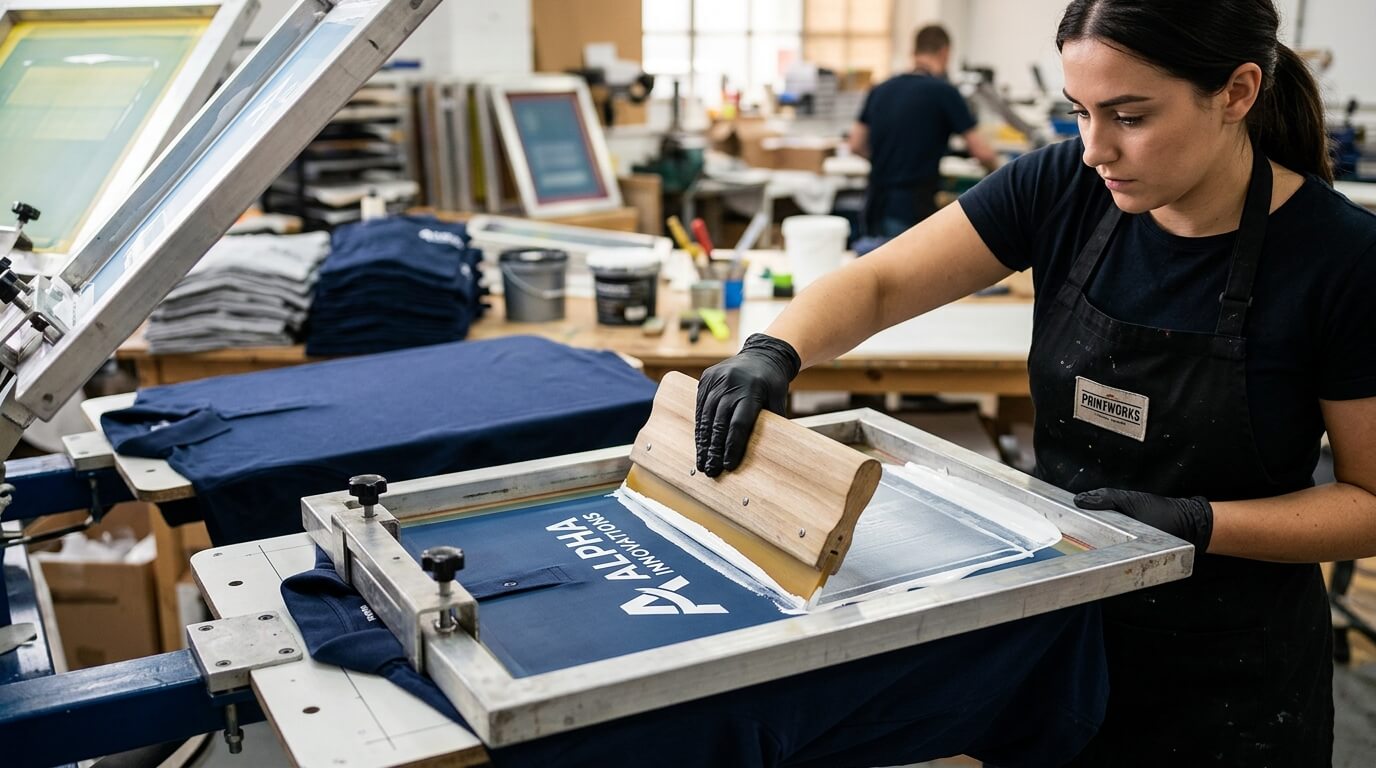
- Cost Efficiency: Delivers outstanding economies of scale for bulk orders exceeding 500 units, lowering decoration unit costs significantly.
- Color Opacity: Produces crisp, bright flat colors with high opacity on dark navy, black, or charcoal uniform fabrics.
- Best Fabric Matches: Ideal for cotton t-shirts, polo shirts, work aprons, and large back prints on industrial field shirts.
- Limitations: Requires individual mesh screen setups for each artwork color, making multi-color small orders cost-prohibitive.
3. Heat Transfer & DTF — High Detail & Small Run Flexibility
Direct-to-Film (DTF) and high-definition thermal vinyl transfers print digital artwork onto specialized release film, which is then thermally bonded onto the garment using a commercial heat press.
- Gradient Precision: Captures intricate photographic details, fine drop shadows, and complex multi-color gradient logos flawlessly.
- Low MOQ Flexibility: Eliminates screen setup fees and digitizing costs, making it perfect for small team orders under 50 units.
- Limitations: Creates a solid synthetic “patch” on the garment that reduces fabric breathability under the printed area. Less durable under harsh industrial laundry conditions compared to direct embroidery.
Master Decoration Comparison Matrix
| Decoration Metric | Direct Embroidery | Screen Printing | Heat Transfer / DTF |
|---|---|---|---|
| Wash Durability | Superior (100+ Washes) | High (40–60 Washes) | Moderate (25–40 Washes) |
| Visual Finish | Premium 3D Textured Luster | Flat Matte or Satin Ink | Smooth Full-Color Film |
| Ideal Placement | Left Chest & Cuffs | Large Back & Chest Prints | Complex Chest & Sleeve Badges |
| Minimum Order Qty | Low (50+ Units) | Medium (250+ Units) | Very Low (25+ Units) |
| Relative Unit Cost | Medium – High (by stitch count) | Low (High Volume) | Medium |
| Gradient Detail Level | Limited (Solid Threads) | Moderate (Halftones) | Exceptional (Photographic) |
Placement & Sizing Conventions for Uniform Branding
Following industry placement standards ensures a balanced, professional look across all workforce sizes:
- Left Chest (Primary Corporate Logo): Standard dimensions range from 3.0 to 3.75 inches wide. Positioned centered between the front placket and armhole seam, aligned vertically with the 2nd and 3rd button.
- Right Chest (Employee Name / Department): Embroidered personal name or department title (0.75 to 1.0 inch tall).
- Sleeve Logos (Brand Badges / Flags): Placed 1.5 to 2.0 inches below the shoulder armhole seam on left or right sleeve (2.0 to 2.5 inches wide).
- Upper Back (Utility / Security Branding): Prominent screen print or heat transfer measuring 8.0 to 11.0 inches wide across the upper shoulder blades.
How to Prepare Your Logo Artwork File for the Factory
To eliminate production setup delays and ensure sharp logo execution:
- Supply Vector File Formats: Provide artwork in vector format (.AI, .EPS, or vector .PDF) with all text fonts converted to outlines. Avoid low-resolution raster JPEGs.
- Specify Pantone PMS Codes: Provide exact Pantone PMS Solid Coated color references to ensure precise thread and ink color matching.
- Commission Professional Embroidery Digitizing: Experienced digitizers convert vector art into .DST or .EMB machine stitch files, adjusting stitch density and push-pull compensation based on fabric weight.
Best Practices for Sourcing Custom Logo Uniform Shirts
When placing orders for custom logo uniform shirts, request physical pre-production embroidered swatches from your manufacturer. Inspect stitch density, backing stabilizer clean-up, and thread tension before issuing final bulk approval. According to international textile washability standards like ASTM garment wash performance specifications, high-quality corporate embroidery must remain flat without puckering or thread unraveling through repeated commercial laundering cycles.
Frequently Asked Questions
Which custom logo method is most durable for uniform shirts?
Direct Embroidery is the most durable method. Polyester embroidery threads withstand over 100 commercial wash cycles without fading, peeling, or cracking under industrial laundry conditions.
Which logo decoration method is cheapest for bulk uniform orders?
For orders exceeding 500 units with 1 to 2-color logos, Screen Printing offers the lowest cost per unit. For small chest logos across all volume tiers, direct embroidery remains highly cost-effective.
Can small text and complex logos be embroidered on uniform shirts?
Text smaller than 4mm (0.15 inches) in height or intricate photographic color gradients cannot be cleanly embroidered. DTF heat transfer or fine screen printing is recommended for small details.
What file format is required to digitize a logo for embroidery?
Vector file formats such as Adobe Illustrator (.AI), Encapsulated PostScript (.EPS), or high-resolution vector PDF are required to create precision digital embroidery files (.DST).
Will embroidery pucker or distort light uniform shirt fabric?
Heavy embroidery on thin fabric (<120 GSM) can pucker if unsupported. Using proper cut-away backing stabilizer interfacing prevents fabric distortion on lightweight dress shirts.
Related Reading: Review our comprehensive guide on selecting corporate uniform shirt fabrics or learn how to manage uniform shirt sizing and fit for bulk orders.
Get a Free Logo Digitizing & Mockup Proof
Want to visualize your logo on our uniform shirts? Send your artwork file and pantone codes to our design team for a complimentary digital proof and stitch count evaluation.