Which Uniform Shirt Fabric Should You Choose?
For general corporate and institutional uniforms, polyester-cotton Poplin is usually the most practical starting point. Choose cotton or cotton-rich CVC when softness and wearer comfort have greater priority, and consider Twill where a stronger and more substantial workwear construction is required.
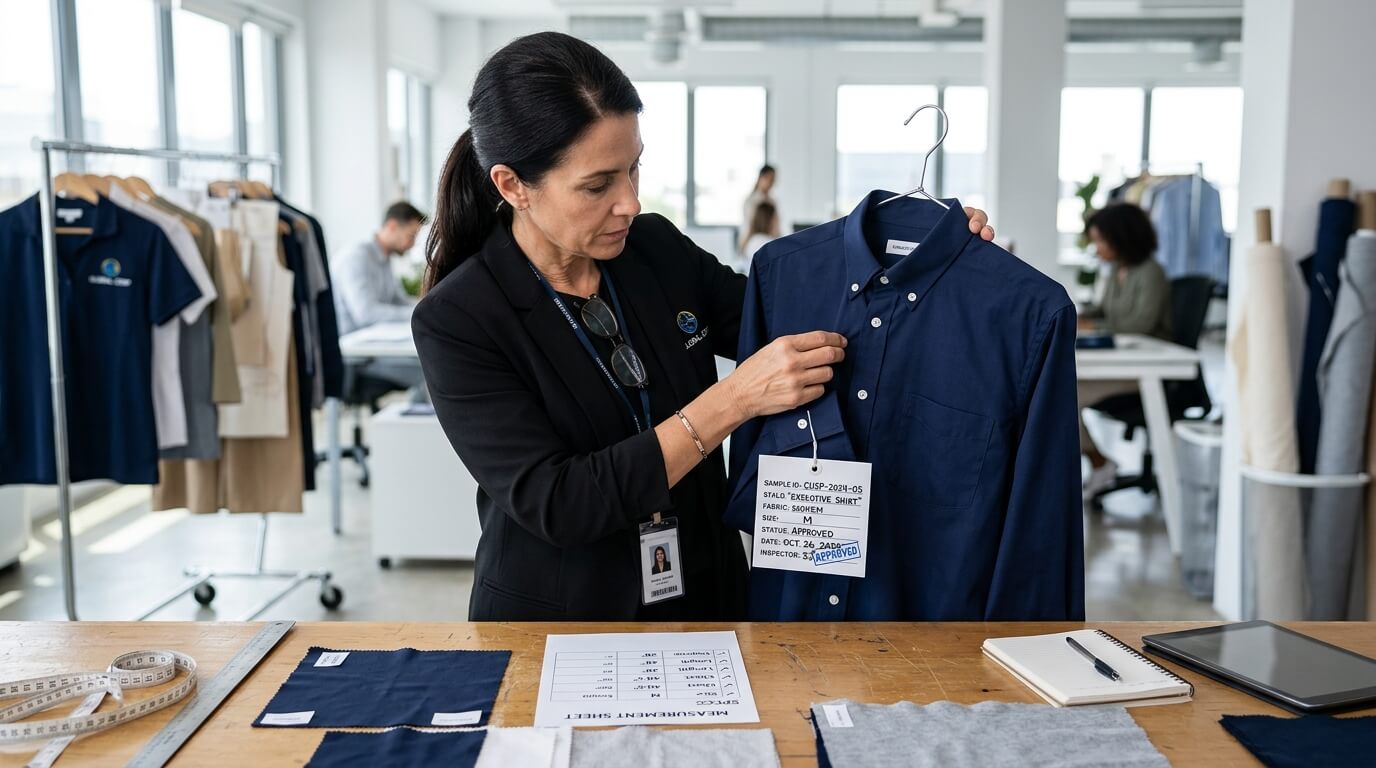
There is no universal “best” uniform shirt fabric. A 65/35 polyester-cotton Poplin used for a hotel reception team has very different performance requirements from a Twill shirt worn by technicians in a logistics facility.
| Requirement | Common Starting Point | Why Buyers Consider It |
|---|---|---|
| Formal corporate shirt | Cotton, CVC or TC Poplin | Smooth and professional appearance |
| Easy-care uniform | 65/35 polyester-cotton | Dimensional stability and crease recovery |
| Softer uniform shirt | Cotton-rich CVC | More cotton-like hand |
| Industrial work shirt | Polyester-cotton Twill | More substantial construction |
| Hot environment | Lightweight cotton or blend | Reduced weight and improved comfort |
| Smart-casual uniform | Oxford | Textured and structured appearance |
Why Fabric Choice Affects Uniform Cost and Lifespan
Uniform sourcing should be evaluated using cost per wear, not simply the initial garment price.
A shirt that costs slightly less but begins fading, shrinking, pilling or losing its professional appearance after repeated washing can become significantly more expensive if it needs to be replaced sooner.
Before selecting a fabric, establish:
- how many days per week the uniform will be worn;
- how frequently it will be washed;
- whether laundering is domestic, commercial or industrial;
- the working climate and temperature;
- exposure to abrasion, stains or outdoor conditions;
- the required corporate appearance;
- acceptable ironing and maintenance requirements; and
- how consistently colour must be reproduced on repeat orders.
If shirts will be reordered every six or twelve months, discuss shade continuity and repeat fabric specifications with the manufacturer from the beginning. Repeatability is part of fabric quality.
The Main Uniform Shirt Fabrics Compared
100% Cotton
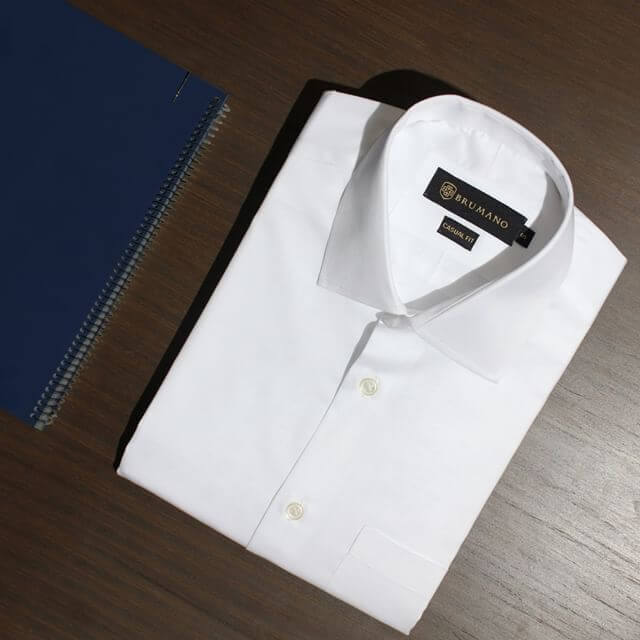
Cotton remains an important choice for corporate uniform shirts because of its natural hand feel, breathability and familiar appearance.
A well-developed cotton Poplin can provide a clean, premium appearance for office employees, hospitality teams, executives and other customer-facing staff.
Compared with polyester-rich fabrics, cotton generally wrinkles more easily and can show greater dimensional change after laundering. Finishing can reduce these effects, but expected shrinkage tolerances should still be agreed before bulk production.
Polyester-Cotton: 65/35 and 60/40
Polyester-cotton is one of the most practical choices for large uniform programmes.
A common TC construction is 65% polyester / 35% cotton. Polyester contributes dimensional stability, crease recovery, drying speed and durability, while cotton contributes absorbency and a familiar textile hand.
Cotton-rich CVC constructions provide another option. For example, a 60/40 CVC may contain 60% cotton and 40% polyester.
When a specification simply states “60/40,” always confirm which fibre represents the 60%.
100% Polyester
Polyester provides good strength, dimensional stability, quick drying and resistance to wrinkling. It can be useful for active roles, outdoor teams and uniforms requiring frequent washing.
Polyester should not automatically be described as moisture-wicking. Moisture-management performance depends on yarn engineering, fabric structure and/or a performance finish.
Performance and Stretch Blends
Modern uniform programmes increasingly use small percentages of elastane or engineered fibres to improve mobility.
These fabrics can work well for hospitality personnel, transport staff, field sales teams and technicians. Stretch should still be evaluated against intended washing temperatures, chemicals and drying processes.
Poplin vs Twill vs Oxford
Fibre composition tells you what the fabric contains. Weave tells you how the yarns are interlaced. Both influence appearance, hand feel and performance.
Poplin
Poplin is a tightly constructed plain-weave fabric with a relatively smooth surface. It creates the clean, crisp appearance commonly associated with corporate, school and hospitality shirts.
For lightweight corporate uniforms, approximately 95–120 GSM can be a practical starting range, depending on opacity, climate and required hand feel.
Twill
Twill is recognised by its diagonal weave structure. It generally provides more body than lightweight Poplin and is commonly used for workwear, utility and security shirts.
Industrial work shirts, maintenance uniforms, utility garments and security shirts commonly use Twill constructions. For examples of heavier-duty shirt programs, see Fashion Villaz workwear shirt manufacturing .
Higher GSM does not automatically mean greater durability. Yarn quality, weave density, tensile strength, tear strength and finishing also affect garment life.
Oxford
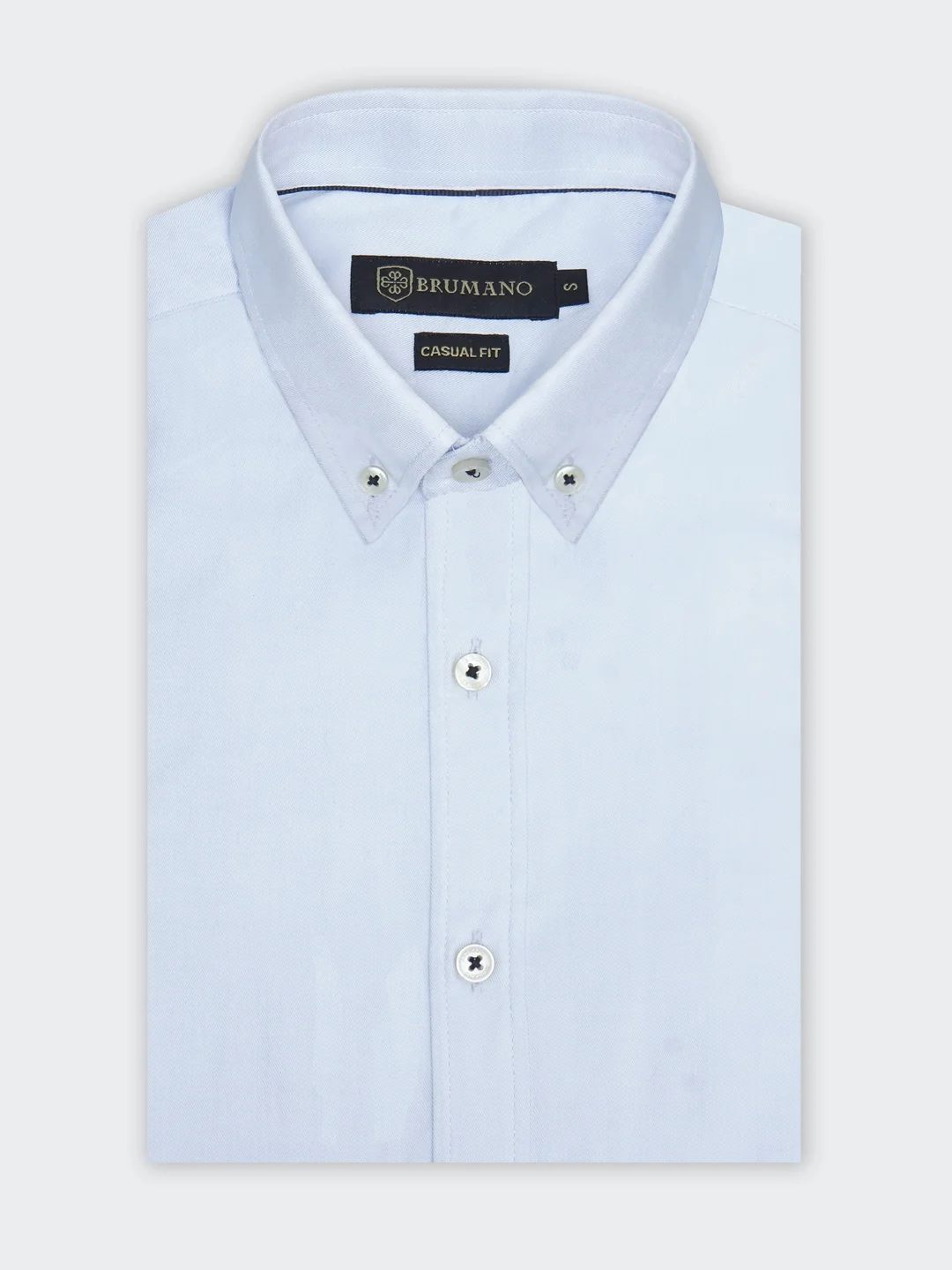
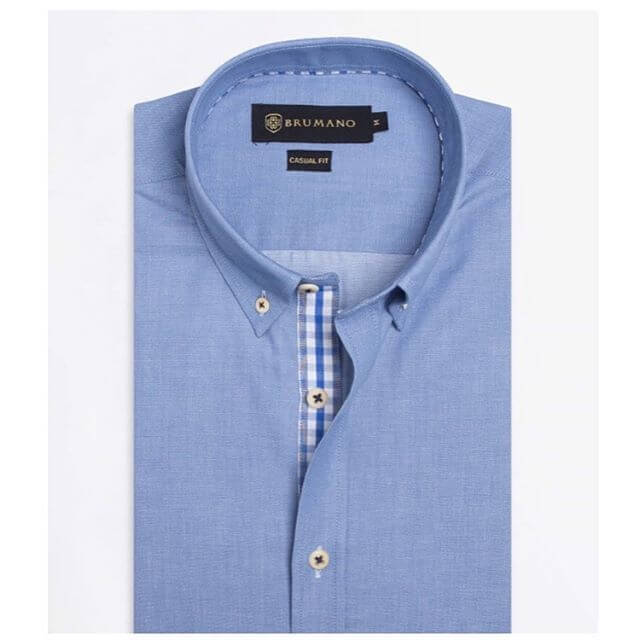
Oxford uses a basket-style weave that creates a visible texture and substantial hand. It works well for corporate teams, hospitality, school shirts and security programmes.
| Feature | Poplin | Twill | Oxford |
|---|---|---|---|
| Surface | Smooth | Diagonal | Basket texture |
| Appearance | Formal / crisp | Structured | Smart casual |
| Typical weight | Light–medium | Medium–heavy | Medium |
| Common use | Corporate / school | Industrial / utility | Corporate / security |
How to Read GSM, Yarn Count and EPI/PPI
GSM means grams per square metre and measures fabric mass over a defined area.
Lower GSM generally creates a lighter garment, while higher GSM gives the fabric more body. GSM alone, however, is not a complete quality specification.
Two fabrics weighing 120 GSM can perform very differently because of differences in fibre composition, yarn quality, yarn count, weave density and finishing.
- EPI means ends per inch and represents warp density.
- PPI means picks per inch and represents weft density.
- Yarn count indicates yarn fineness or coarseness.
120 GSM finished weight
Poplin weave
Specified yarn count
Specified EPI × PPI
Piece dyed
Approved colour standard
Agreed dimensional stability
Evaluating GSM + yarn count + EPI/PPI + fibre composition + weave + finishing provides considerably more useful purchasing information than generic “thread count.”
Fabric Performance for Industrial Laundry
If uniforms will be industrially laundered, inform the manufacturer before fabric selection and sampling.
Industrial laundering may expose garments to elevated temperatures, detergents, mechanical action and drying processes that are more demanding than normal home washing.
Performance areas can include:
- dimensional stability;
- colour change and staining;
- pilling;
- seam appearance;
- creasing; and
- overall appearance after repeated washing.
ISO 15797 provides industrial washing and finishing procedures for evaluating workwear intended for industrial laundering.
For colourfastness to domestic and commercial laundering, ISO 105-C06 is another recognised textile test reference.
“Colour must not fade” is not a technical specification. Define the laundering conditions and agree measurable acceptance requirements with the supplier.
Matching Uniform Shirt Fabric to the Industry
Flame-resistant, high-visibility and other protective garments must be developed against the applicable safety requirements. Ordinary corporate uniform fabric criteria are not sufficient.
Questions to Ask Before Approving a Uniform Fabric
Professional sourcing replaces vague descriptions such as “premium fabric” or “good quality” with measurable specifications.
At UniformShirt.net, fabric development can be based around the buyer’s end use, composition, weave, GSM, colour, branding, washing conditions and target cost. Custom shirt programmes can be developed in Poplin, Oxford and Twill using TC polyester-cotton, CVC and 100% cotton. For a broader view of woven shirt manufacturing capabilities, visit Fashion Villaz Shirt Manufacturing .
Frequently Asked Questions About Uniform Shirt Fabric
What is the best fabric for corporate uniform shirts?
There is no single best fabric. Cotton or cotton-rich CVC Poplin can work well when comfort and appearance are priorities, while polyester-cotton is often preferred for durability and easier maintenance.
Is 65/35 polyester-cotton good for uniform shirts?
Yes. It provides a practical balance of durability, crease recovery, dimensional stability and wearer comfort.
What GSM is suitable for a uniform shirt?
Approximately 95–120 GSM can suit lightweight corporate Poplin, while Oxford, Twill and workwear fabrics commonly use higher weights.
Is Twill better than Poplin for workwear?
Twill is often selected where a stronger and more substantial construction is required. Poplin can be preferable where lower weight and a formal appearance are priorities.
Is polyester automatically moisture-wicking?
No. Moisture-wicking depends on fibre or yarn engineering, fabric construction and/or a performance finish.
Should uniform fabric be tested before bulk production?
Yes. For substantial B2B programmes, composition, GSM, shade, dimensional stability and applicable laundering performance should be established before production.
Choose the Fabric Around the Job — Not Just the Price
The correct uniform shirt fabric is the one that delivers the required appearance, wearer comfort and service life under the conditions in which the garment will actually be used.
Start with four questions:
Who will wear it? Where will they work? How will the shirt be washed? How long should it remain in service?
Once these requirements are established, fibre composition, weave, GSM, yarn construction and finishing can be developed around the programme.
UniformShirt.net manufactures custom Poplin, Oxford and Twill uniform shirts in TC polyester-cotton, CVC and 100% cotton constructions for international B2B buyers.
Need Help Selecting a Fabric for Your Uniform Programme?
Share your shirt design, quantity, target fabric or GSM, branding requirements and intended washing conditions. We can review the specification, recommend a suitable construction and develop samples before bulk production.