Evaluating wholesale quotations for corporate apparel requires understanding how factories calculate a uniform shirt MOQ (Minimum Order Quantity) and unit price structures. When sourcing custom workwear at scale, unit costs fluctuate based on raw fabric dyeing minimums, cutting table efficiency, embroidery setup costs, and international freight terms. Grasping these financial mechanisms allows procurement teams to optimize bulk orders without sacrificing fabric quality.
📌 Table of Contents
- What Is a Uniform Shirt MOQ and Why Do Manufacturers Set One? (Direct Answer)
- What Actually Drives Your Per-Unit Uniform Shirt Cost?
- 1. Fabric Blend & GSM Weight Impact
- 2. Customization (Stitch Count & Tailoring Details)
- 3. Order Volume & Size/Color Ratio Breakdown
- 4. Freight Method & Incoterms Selection
- MOQ & Volume Pricing Tier Matrix
- How to Lower Your Effective Unit Cost Without Sacrificing Quality
- Best Practices for Navigating Uniform Shirt MOQ Limits
- Frequently Asked Questions
What is a uniform shirt MOQ and why do manufacturers set one?
What is a uniform shirt MOQ?
Direct Answer: A uniform shirt MOQ (Minimum Order Quantity) is the smallest number of custom-manufactured shirts a factory agrees to produce in a single production run. Factories set MOQs to cover fixed setup costs, including fabric dye-vat minimums (typically 1,000 meters), laser cutting bed calibration, pattern grading, and multi-head embroidery machine digitizing setups.
What Actually Drives Your Per-Unit Uniform Shirt Cost?
When requesting quotations for bulk uniform shirt pricing, four primary production factors determine your final unit cost:
1. Fabric Blend & GSM Weight Impact
Raw textile materials account for 45% to 60% of total manufacturing expenditure. High-grade combed 100% cotton or technical moisture-wicking synthetic yarns cost significantly more than standard carded poly-cotton blends. Furthermore, heavier fabric weights (e.g., 180 GSM oxford vs 120 GSM poplin) increase yarn consumption per yard, directly raising unit costs.
2. Customization (Stitch Count & Tailoring Details)
Labor and machine runtime costs scale with garment complexity:
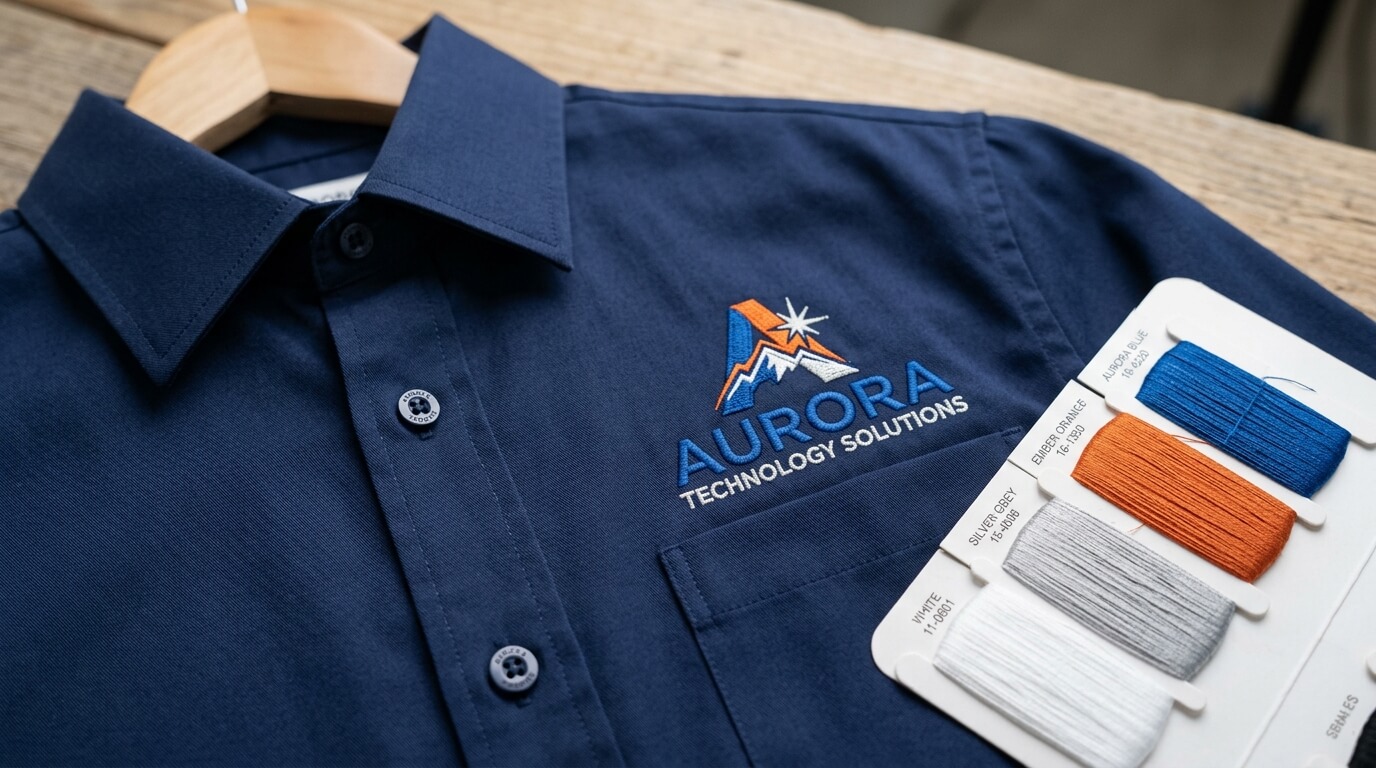
- Embroidery Stitch Count: High-density logos with 12,000 stitches take double the machine run time of a simple 5,000-stitch line logo, adding to unit pricing.
- Garment Tailoring Construction: Features such as contrast inner collar bands, dual buttoned chest pockets, shoulder epaulets, and reinforced double-needle side seams require additional sewing steps.
3. Order Volume & Size/Color Ratio Breakdown
Fixed setup costs (dyeing vats, cutting markers, sewing line configuration) are amortized across your order quantity. Ordering 2,000 shirts in a single solid navy color allows max cutting efficiency. Splitting that same 2,000-unit order across five custom dyed colors drastically increases setup overhead per color.
4. Freight Method & Incoterms Selection
Landed costs depend heavily on your chosen shipping terms under official International Chamber of Commerce Incoterms standards:
- FOB (Free on Board): Factory covers production and export clearance to origin port; buyer arranges ocean freight and destination customs clearance.
- DDP (Delivered Duty Paid): Factory manages end-to-end logistics, import duties, and door delivery—offering zero-hassle pricing.
MOQ & Volume Pricing Tier Matrix
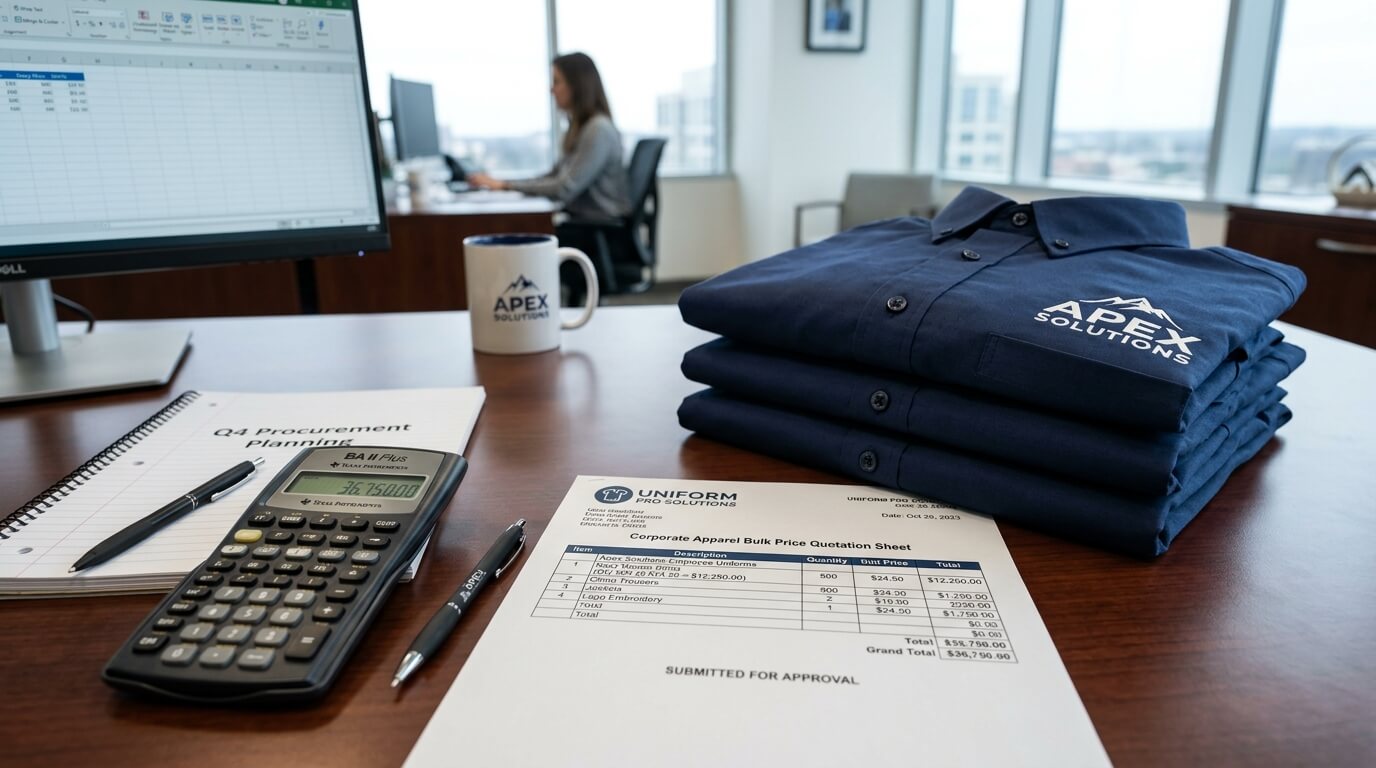
The table below illustrates how volume brackets impact unit economics across typical B2B production runs:
| Volume Tier | Fabric Sourcing Type | Setup Overhead Amortization | Unit Cost Savings vs Base |
|---|---|---|---|
| 100 – 250 Units | Factory In-Stock Fabric Colors | High (Setup divided by few units) | Base Tier Price |
| 500 – 1,000 Units | Standard Mill Fabric Lots | Moderate | 12% – 18% Savings |
| 2,500 – 5,000+ Units | Custom Mill Dye-Vats & Weaves | Minimal (Optimal Efficiency) | 25% – 35% Savings |
How to Lower Your Effective Unit Cost Without Sacrificing Quality
Enterprise procurement managers can utilize several strategic levers to reduce wholesale shirt pricing:
- Select In-Stock Factory Fabrics: Using factory-stocked poly-cotton twill or poplin colors eliminates custom dye-vat surcharges and lowers minimum order thresholds.
- Consolidate Department Styles: Standardize body fabrics and colors across management, sales, and field service teams, using distinct embroidery thread colors to differentiate roles.
- Optimize Size Ratios: Order standard bell-curve size ratios (M:L:XL at 1:2:2) to maximize fabric marker cutting efficiency.
Best Practices for Navigating Uniform Shirt MOQ Limits
When negotiating contract terms around uniform shirt MOQ requirements, request a tiered price schedule (e.g., pricing at 300, 500, 1,000, and 2,500 units) from your supplier. This provides full transparency on how unit costs drop as your order volume scales over time.
Frequently Asked Questions
Why do uniform manufacturers enforce minimum order quantities?
Factories set MOQs to offset fixed setup expenses, including mill fabric dyeing minimums, cutting marker preparation, sewing machine line configuration, and embroidery digitizing setups.
Do MOQs apply per order or per color/style?
MOQs typically apply per fabric style and colorway because fabric mills require minimum dye-vat quantities for each individual color lot.
How can buyers get lower MOQs for small team orders?
Buyers can achieve lower MOQs (50 to 100 units) by choosing factory in-stock fabrics rather than requesting custom mill-dyed pantone colors.
What is included in DDP (Delivered Duty Paid) uniform pricing?
DDP pricing includes unit garment manufacturing, logo decoration, export packaging, ocean/air freight, import customs clearance, tariffs, and direct delivery to your warehouse.
How do I obtain a formal custom uniform quote?
Submit your estimated order quantity, preferred fabric composition, garment style, and logo artwork file via our online RFQ submission page for an itemized cost proposal.
Related Reading: Learn more about sourcing uniform shirts from Pakistan or review our corporate uniform shirt fabric selection guide.
Get an Exact Quote for Your Order Volume & Spec
Planning a corporate uniform rollout? Share your order quantities, target destination, and branding details for an itemized factory price quotation.